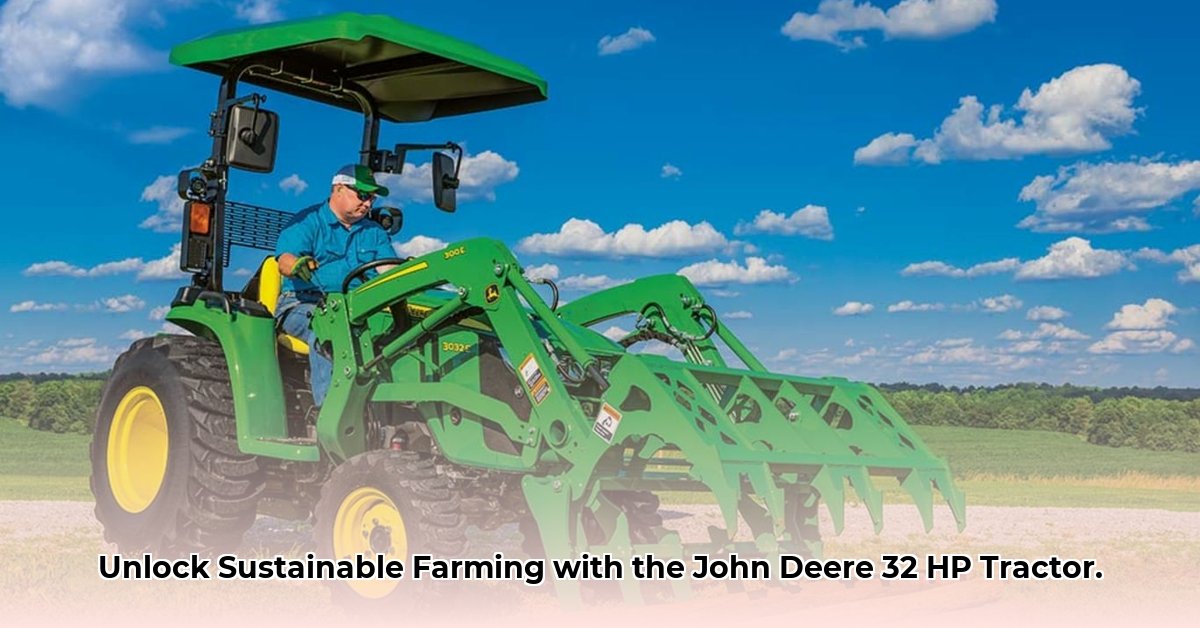
Choosing the right tractor is crucial for efficient and sustainable farming. This guide focuses on the John Deere 32 hp compact tractor series, comparing models to help you select the best fit for your operation. We'll analyze key performance indicators (KPIs), stakeholder impact, and long-term trends to inform your decision. For troubleshooting AC issues, see this helpful guide: John Deere AC Troubleshooting.
Power and Efficiency: Optimizing Your Output
Horsepower isn't everything; fuel efficiency is equally vital for sustainable farming. The 32 hp John Deere 2032R (and similar models) offers a balance. Its Yanmar diesel engine, employing a common rail system (CRS) and electronic control unit (ECU), is designed for fuel economy. This translates to lower running costs, beneficial for both your budget and the environment. Larger John Deere 3-series tractors offer more horsepower, but this increased power often comes at the cost of higher fuel consumption. Which is better for your operation? The answer depends on your workload.
Does the extra horsepower of a larger model truly offset its increased fuel costs? This is a key question to consider, particularly from a sustainability perspective. A data-driven approach, carefully considering your specific needs, is essential for making the right choice.
Smart Technology: Enhancing Productivity and Sustainability
Modern tractors offer features that significantly enhance sustainability. The 32 hp John Deere models often include iMatch™ Quik-Hitch (a system for quick attachment changes), increasing efficiency. The Twin Touch™ foot pedals on the hydrostatic transmission (HST) provide precise control, minimizing wasted effort and fuel. Cruise control helps maintain consistent speed, improving both efficiency and fuel economy. These features, while seemingly minor, cumulatively contribute to substantial gains in productivity while reducing your environmental footprint. Larger models incorporate similar technologies, but at a higher purchase price. Do these added capabilities justify the increased cost for your farm's needs?
Assessing Total Cost of Ownership (TCO): A Long-Term Perspective
The initial purchase price is just one aspect of tractor ownership. Total cost of ownership (TCO) includes fuel costs, maintenance, repairs, and eventual resale value. The 2032R's fuel efficiency can significantly reduce long-term expenses, making it a potentially more cost-effective option over time. However, a thorough TCO analysis comparing various models, considering your workload and usage patterns, is crucial. A larger, more powerful tractor may be faster initially, but the cumulative cost over its lifespan might exceed that of a smaller, more fuel-efficient model.
"What is the long-term financial picture for each potential model?" This demands a detailed cost analysis over the tractor's expected operational life.
Environmental Impact: Minimizing Your Farm's Footprint
Sustainable agriculture requires minimizing environmental impact. The 32 hp John Deere's emission control systems reduce harmful pollutants. However, your farming practices significantly influence the overall ecological effect. Consider using biodiesel fuel, which can considerably reduce emissions. Remember the entire lifecycle of the tractor; responsible disposal and recycling are also critical factors in your environmental footprint. The tractor itself is only one piece of the puzzle; usage practices and end-of-life management are equally consequential.
Dr. Emily Carter, Professor of Chemical and Biological Engineering at Princeton University, states, "The total environmental impact assessment of agricultural machinery must encompass its entire lifecycle, from manufacture to disposal, to gain a complete picture of its sustainability."
Stakeholder Impact: Considering a Broader Perspective
Your tractor choice impacts various stakeholders. Small-scale farmers may find the 32 hp John Deere ideal due to its size and affordability. Larger operations might require the power of higher horsepower models. Equipment dealers benefit from tractor sales, while policymakers influence sustainable agriculture through incentives and regulations. Consumers ultimately benefit from environmentally responsible farming practices. Your decision has ripple effects throughout the agricultural ecosystem.
Comparative Analysis: Key Model Features
| Feature | 32 hp John Deere Tractor (2032R) | John Deere 3-Series (Example: 3032E) | Notes |
|---|---|---|---|
| Horsepower | ~30 HP | ~32-35 HP | Actual horsepower may vary by model and configuration |
| Fuel Efficiency | Generally Higher | Generally Lower | Depends on workload and operating conditions |
| Initial Cost | Typically Lower | Typically Higher | Pricing varies by region and dealer |
| Maintenance | Potentially Lower | Potentially Higher | Dependent on usage and maintenance schedule |
| Technology | iMatch™, Twin Touch™, Cruise Control | Often more advanced features | Specific features vary by model and year |
| Sustainability | Good; higher fuel efficiency | Good; but higher fuel consumption | Overall impact depends on usage and disposal practices |
This table provides a simplified overview. Regional pricing, specific model features, and actual workload all influence the final choice. Thorough research, including consultations with dealers and other farmers, is recommended.
Conclusion: Making an Informed Decision
Selecting the right tractor demands careful consideration of your unique farming operation and priorities. This guide highlighted the importance of comparing models based on power, efficiency, TCO, environmental impact, and stakeholder considerations.
Remember to consult with your local John Deere dealer for tailored guidance and explore available grants or subsidies for sustainable agricultural equipment. The best tractor for your farm may differ from what's best for others.